Choosing the Right Display Font: Why Nightside Stands Out for Modern Design
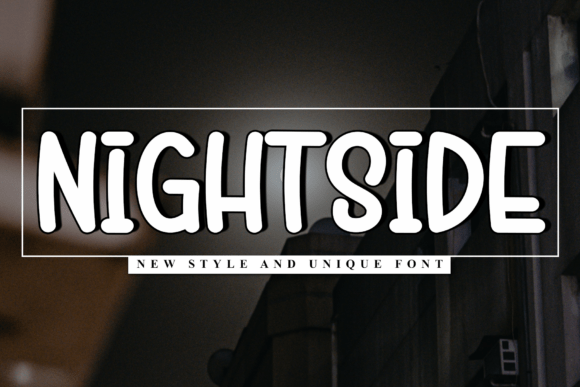
When it comes to selecting a display font for branding, packaging, or digital headlines, the right choice can significantly influence how your message is received. Nightside emerges as a compelling option, especially for those seeking a balance between casual warmth and professional clarity. This font blends the appeal of modern handwritten typography with a refined structure that ensures readability and visual harmony across different applications.
Understanding Nightside: A Blend of Simplicity and Personality
At its core, Nightside is a casual yet refined display font that avoids the extremes of overly stylized or rigidly formal typefaces. Its clean lines and balanced letterforms offer a neutral foundation, while the subtle rounded edges introduce a sense of approachability. Unlike many display fonts that sacrifice legibility for aesthetic flair, Nightside maintains a polished finish that works well in both small and large formats.
Designers often seek typefaces that can convey tone without compromising function. Nightside achieves this by combining the organic feel of handwriting with the structural integrity of a well-crafted sans-serif. This duality makes it particularly effective in contexts where warmth and professionalism must coexist—such as lifestyle branding, boutique packaging, or editorial headlines.
How Nightside Compares to Similar Display Fonts
In the landscape of modern display fonts, several styles compete for attention: script-based faces that emphasize elegance, geometric sans-serif variations that lean into minimalism, and hybrid forms that attempt to bridge the gap. Nightside falls into the latter category, offering a middle ground that avoids the overly formal or the excessively decorative.
- Script fonts are often expressive and elegant but can be difficult to read at smaller sizes or in dense layouts.
- Geometric sans-serif fonts prioritize clarity and structure but may feel cold or impersonal in contexts that require a human touch.
- Hybrid or handwritten-inspired fonts like Nightside aim to combine the best of both worlds—offering legibility with a personal tone.
For example, in a branding scenario for a coffee shop or wellness brand, a purely geometric font might feel too clinical, while an elaborate script could come across as outdated or overly ornate. Nightside strikes a tone that feels contemporary and personable without leaning too far in either direction.
Strengths and Tradeoffs of Using Nightside
One of the most notable strengths of Nightside is its versatility. It performs well in a range of applications—from print packaging to digital banners—without requiring extensive typographic adjustments. Its rounded edges soften the overall appearance, making it feel more inviting than sharper, more angular alternatives. Additionally, the font’s clean structure ensures it remains readable even when used at moderate sizes or against textured backgrounds.
However, like any font, it has its limitations. While Nightside is excellent for headlines and short-form text, it may not be ideal for extended body copy. Display fonts are generally not designed for long paragraphs, and Nightside is no exception. In projects requiring both a headline and body font, pairing it with a complementary sans-serif or serif typeface can help maintain visual cohesion without sacrificing readability.
When Nightside Is the Right Choice
Nightside shines in environments where a friendly, modern tone is needed without compromising on professionalism. Consider it for the following use cases:
- Brand identities for lifestyle, wellness, or creative businesses where warmth and clarity are key.
- Packaging design that aims to stand out on shelves while maintaining a clean, approachable aesthetic.
- Digital headlines or social media assets where legibility and visual appeal must work together.
- Editorial design elements like subheadings or pull quotes that benefit from a human touch without overwhelming the layout.
If your project requires a font that can convey personality without sacrificing structure, Nightside is worth considering. It’s particularly effective when you want to avoid the overly formal look of traditional sans-serif fonts but still need a level of polish that many handwritten or brush-style fonts can’t provide.
When You Might Choose an Alternative
Despite its strengths, there are scenarios where Nightside may not be the best fit. For instance, if your design calls for a highly stylized or vintage aesthetic, a more decorative font might be more appropriate. Similarly, in corporate or technical environments where neutrality and precision are paramount, a more restrained sans-serif or serif font may serve better.
Projects with heavy typographic demands—such as multi-page documents or mobile interfaces with small text—may also benefit from using a different primary font, even if Nightside is employed for accent elements. The key is to match the font’s character and functional strengths with the specific needs of your design context.
Practical Tips for Using Nightside Effectively
To get the most out of Nightside, consider the following best practices:
- Pair it wisely—Combine with a clean sans-serif or serif font for body text to maintain contrast and hierarchy.
- Use it at the right size—Opt for larger point sizes in headlines and avoid using it too small where rounded edges may reduce clarity.
- Test across formats—Ensure it maintains legibility on both print and digital platforms, especially if used in mobile contexts.
- Balance with white space—Give the font room to breathe in your layout to enhance its clean, open appearance.
By aligning the font’s characteristics with your project’s visual and functional goals, you can ensure that Nightside contributes meaningfully to your design rather than simply filling a typographic role.
Making an Informed Choice Among Display Fonts
Ultimately, the decision to use Nightside should stem from a broader evaluation of your design needs. While it offers a compelling blend of simplicity and warmth, it’s important to weigh its strengths against other available options. Whether you're comparing display fonts or exploring different typographic styles, the goal is to find a typeface that supports your message, enhances readability, and aligns with your brand’s personality.
As with any design decision, context is key. If you're aiming for a modern, approachable aesthetic that still feels polished, Nightside is a strong contender. But if your project leans toward the highly formal, the highly decorative, or the strictly functional, another font may serve you better. By understanding the tradeoffs and considering real-world applications, you can make a more confident and informed choice that elevates your overall design.