Nagoku: A Modern Retro Font for Expressive Design
Introduction to Nagoku
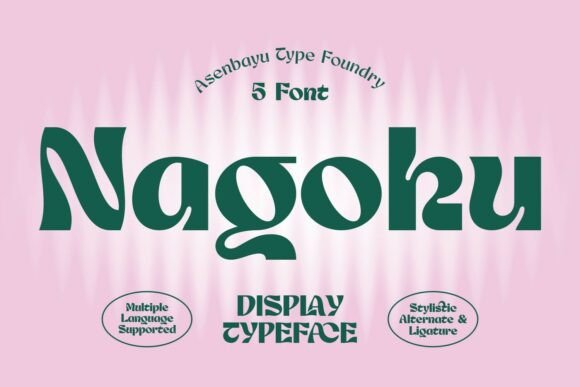
Nagoku is a decorative display font that merges the visual appeal of vintage typography with the clarity and adaptability required in today’s design landscape. Designed with soft inktrap details and smooth geometric contours, Nagoku offers a rhythmic flow that enhances its visual presence without compromising legibility. It draws inspiration from the poster typography of the 1960s and 1970s, making it a compelling choice for designers seeking a nostalgic yet contemporary aesthetic.
Key Design Characteristics
At its core, Nagoku distinguishes itself through a combination of subtle inktrap features and balanced geometric forms. These elements work together to give each letter a crafted appearance while maintaining readability even at larger sizes. The font’s inktraps—small notches where strokes meet—add a tactile quality that mimics traditional printing techniques, enhancing the font’s retro authenticity.
- Soft inktrap details add character and depth
- Smooth geometric shapes ensure visual harmony
- Expressive letterforms create a unique typographic rhythm
These design choices make Nagoku stand out in applications where visual impact is key, such as branding, editorial layouts, and product packaging.
Purpose and Practical Applications
Nagoku was developed with a specific use case in mind: high-impact display work. Its decorative nature and strong visual presence make it unsuitable for body text but ideal for headlines, logos, and other attention-grabbing applications. Designers working on branding projects, advertising materials, or creative editorial layouts will find Nagoku particularly effective in conveying a sense of retro sophistication with a modern edge.
Some of the most appropriate use cases include:
- Logo design for lifestyle or heritage brands
- Headlines in magazines or digital publications
- Packaging for boutique products or limited editions
- Poster and promotional material design
Performance in Real-World Use
From a practical standpoint, Nagoku performs well in both digital and print environments. Its clear structure ensures that it remains legible on screens, while its inktrap design adds texture and depth in printed formats. When used at appropriate sizes—typically 24pt and above—Nagoku maintains its clarity and expressive qualities.
Designers have reported success using Nagoku in branding projects that aim to evoke a sense of nostalgia without appearing outdated. For example, a small coffee roastery aiming to communicate artisanal craftsmanship and a retro vibe could use Nagoku in its logo and packaging design to great effect.
Quality and Usability
The font is well-constructed, with consistent stroke weights and spacing that contribute to a professional finish. Kerning pairs have been carefully adjusted to ensure even spacing across letter combinations, which is essential for maintaining visual balance in headlines and logos.
Usability is another strong point. Nagoku is typically available in OpenType format, supporting a wide range of languages and character sets. This makes it suitable for international projects where multilingual support is necessary.
Flexibility and Consistency
While Nagoku is primarily a display font, it offers a level of flexibility that allows it to be used across various design disciplines. Its stylistic alternates and ligatures provide designers with creative options, enabling customization without sacrificing typographic integrity.
However, due to its ornamental nature, Nagoku should be used selectively. Overuse—particularly in long-form or body text—can reduce readability and diminish its visual impact. Instead, it works best when paired with a clean, minimalist sans-serif or serif font for contrast and balance.
Who Benefits Most from Nagoku?
Creative professionals who work on branding, editorial, and packaging design will find Nagoku most useful. It’s particularly well-suited for:
- Graphic designers creating vintage-inspired brand identities
- Marketers developing campaigns with a retro aesthetic
- Freelancers looking for unique typefaces that stand out
- Small business owners crafting custom packaging or promotional materials
For these users, Nagoku offers a way to differentiate their work while staying within a design-forward, functional framework.
Practical Recommendations
When incorporating Nagoku into a design project, consider the following:
- Use it at larger sizes to preserve clarity and visual appeal
- Pair it with simple, clean fonts to avoid typographic clutter
- Test it in both digital and print formats to ensure consistency
- Limit its use to headlines, logos, and short text blocks
These strategies help maximize the font’s strengths while minimizing potential drawbacks related to legibility and readability.
Possible Limitations
Despite its many strengths, Nagoku is not a one-size-fits-all solution. Its decorative nature limits its usability in certain contexts, particularly in long-form text or minimalist design environments. Additionally, because of its stylistic flourishes, it may not be suitable for projects requiring a more formal or neutral tone.
Designers should also be aware that while Nagoku works well in headline settings, its impact can diminish when overused or applied inappropriately. As with any display font, moderation and thoughtful application are key to achieving the best results.
Long-Term Value and Final Thoughts
In the broader landscape of decorative fonts, Nagoku holds its own by offering a distinctive blend of retro charm and modern readability. Its design considerations—especially the inktrap details—set it apart from more generic display fonts. For professionals seeking a typeface that brings both personality and functionality to their work, Nagoku represents a worthwhile addition to their typographic toolkit.
As design trends continue to evolve, Nagoku’s timeless aesthetic ensures that it remains relevant across multiple applications. Whether used in a rebranding effort, a magazine layout, or a product launch, it provides a visual language that communicates both craftsmanship and creativity.